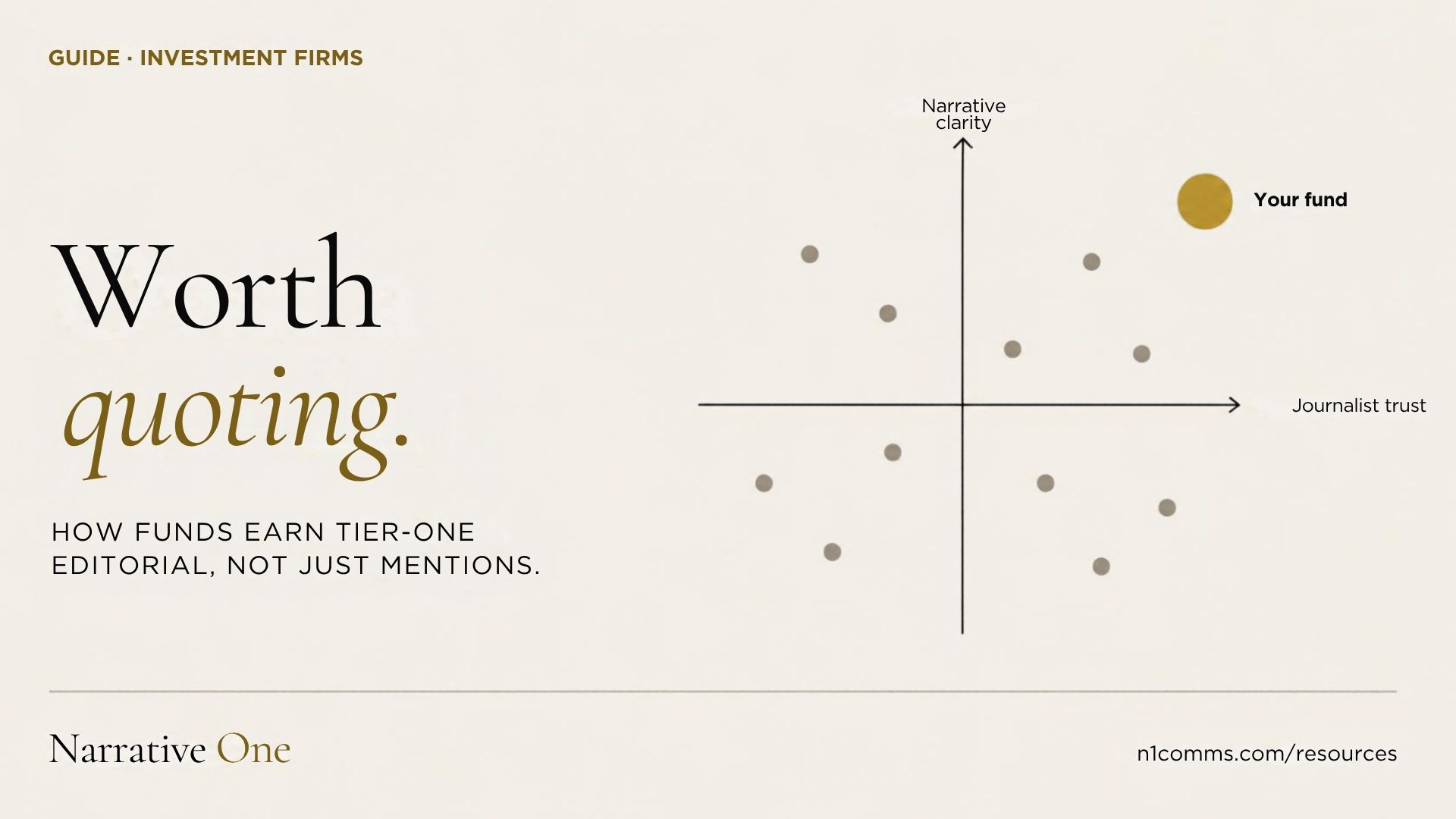
Access doesn’t make a story newsworthy. For investment firms asking how to get press in Financial Times, the decisive question is whether the announcement reveals something material beyond the organisation itself.
A fundraise, portfolio-company milestone or market claim may matter to stakeholders and still fall short of an editorial story. Financial Times journalists need a clear new fact, credible evidence and a reason it matters to readers beyond the company. A generic pitch makes that case harder to see and can spend journalist attention without earning consideration.
This guide shows how to test a story’s editorial relevance, frame it in concise, evidence-led language and prepare materials a reporter may need. It also covers how to identify relevant journalists, tailor an approach and follow up without treating coverage as an entitlement. Start with the evidence, not the announcement. Significance, clarity and disciplined outreach give a story its strongest foundation.
Key Takeaways
Assess whether your announcement has wider significance, credible evidence and a clear consequence for readers before pitching.
To understand how to get press in Financial Times, build one focused angle around a verified event and support it with relevant facts.
Prepare approved claims, attributable sources and a spokesperson who can address the story accurately.
Research journalists’ relevant reporting and tailor each approach instead of sending a generic pitch to a broad list.
Be ready to respond promptly to follow-up, while recognising that no response or coverage can result from an independent editorial process.
Table of Contents
How to Get Press in the Financial Times: Start With Editorial Relevance
Build a Financial Times Pitch Around One Verifiable Investment Story
Financial Times Press Readiness: Evidence, Compliance, and Spokespeople
How to Approach Financial Times Journalists Without Sending a Generic Pitch
After the Pitch: Manage Financial Times Coverage Expectations and Next Steps
How to Get Press in the Financial Times: Start With Editorial Relevance
Earned coverage is an independent editorial decision. It isn’t a placement an organisation can buy or an outcome a communications process can assure. Preparation can make a story clearer and easier to assess, but it can’t determine whether a journalist chooses to pursue it.
A company milestone is a fact. The story is why that fact matters to people beyond the company. A financing announcement, for example, may interest existing stakeholders but offer little to a broader readership unless it signals a verifiable change in capital formation, market conditions or a portfolio sector. The test is consequence, not corporate enthusiasm.
A pitch is a short argument for why a specific, evidence-backed story matters now. To assess how to get press in Financial Times, begin with that argument, not a request for coverage. The Financial Times has a distinct history and institutional context, but background alone won’t establish fit. Research relevant recent reporting to understand what the publication is covering and where your evidence may add something new.
What makes an investment story relevant to the Financial Times?
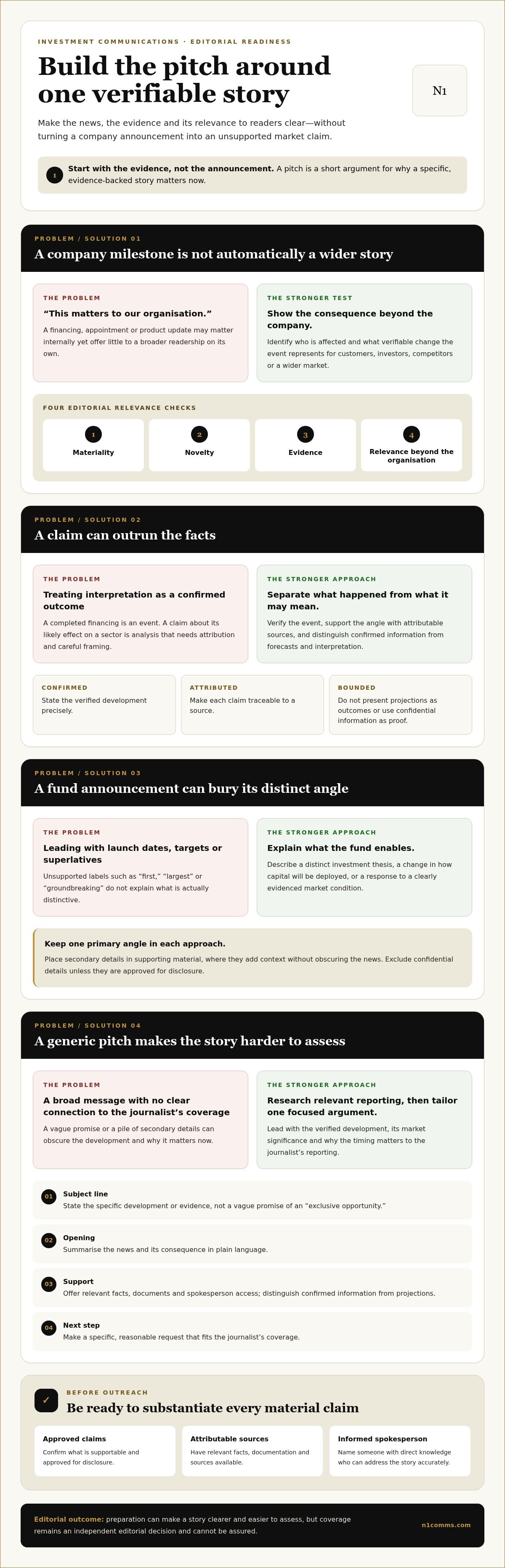
Test the angle against four factors: materiality, novelty, evidence and relevance beyond the announcing organisation. A routine appointment or product update may be important internally. A development that changes a company’s financing position, affects market participants or offers credible insight into an investment trend may have broader significance. These are tests, not guarantees. Review recent articles on the relevant beat before deciding that your story fits.
When is a fund or portfolio announcement newsworthy?
Identify three things: what happened, who is affected and what verifiable change it represents. A portfolio-company announcement becomes more than a corporate update when evidence shows a consequence for customers, investors, competitors or a wider market. State the change precisely, then support it with attributable sources and approved facts. For practical context on shaping portfolio news, see the portfolio company PR guide for investment firms.
Separate the event from the interpretation. A completed financing is an event; its terms, participants and implications may support an editorial angle if they’re verifiable and relevant. Don’t present routine activity as a market shift without evidence. Even a well-supported story delivered to a relevant journalist remains subject to the Financial Times’ editorial discretion. Access can enable a conversation, but it can’t secure a story.
Build a Financial Times Pitch Around One Verifiable Investment Story
A credible investment pitch is built in sequence, not assembled from a fund announcement’s most impressive-sounding claims. First verify the event. Then define its significance, select evidence that supports the claim and tailor the argument to the journalist’s coverage. Keep one primary angle in each approach. Put secondary details in supporting material, where they add context without obscuring the news.
A strong pitch makes the news, the evidence and the reader relevance clear quickly. Separate confirmed facts from forecasts and interpretation. A completed transaction is a fact; a claim about its likely effect on a sector is analysis that needs attribution and careful framing. The FT Editorial Code of Practice is a useful reference for understanding the publication’s stated standards. Don’t present projections as outcomes or use confidential information as proof.
How to find the story inside a fund announcement
Move beyond the fund’s launch date or stated target. Ask what the fund enables: a distinct investment thesis, a change in how capital will be deployed or a response to a clearly evidenced market condition. Describe what is distinctive in specific terms, not with unsupported labels such as “first,” “largest” or “groundbreaking.” Exclude confidential details unless they’re approved for disclosure. For launch context and communications planning, read this strategic guide to announcing a new fund.
What to include in a concise journalist pitch
Lead with the verified development. Explain its market significance and why the timing matters to the journalist’s reporting. Name an informed spokesperson and identify the evidence available, such as approved transaction details, attributable sources or relevant documentation. Make each claim traceable to a source.
Subject line: State the specific development or evidence, not a vague promise of an “exclusive opportunity.”
Opening: Summarise the news and its consequence in plain language.
Support: Offer relevant facts, documents and spokesperson access, while distinguishing confirmed information from projections.
Next step: Make a specific, reasonable request that fits the journalist’s coverage.
This is the working discipline behind how to get press in Financial Times: a focused argument, relevant proof and clear boundaries around what can be shared. NarrativeOne’s Strategy & narrative service helps investment firms organise the story and supporting evidence before outreach.
Financial Times Press Readiness: Evidence, Compliance, and Spokespeople
A strong angle can still falter under basic scrutiny. Before approaching a journalist, establish that every material claim is supportable, approved for disclosure and explainable by someone with direct knowledge. This discipline protects credibility and keeps the pitch aligned with information the organisation can stand behind.
Use a pre-pitch review to check:
Figures: Confirm amounts, dates, transaction status and other material details against source documents.
Claims: Ensure each assertion is approved and consistent with public materials.
Sources: Identify who can substantiate each claim and whether they can be quoted.
Disclosure: Separate public facts from confidential information, forecasts and claims still awaiting approval.
Spokesperson: Confirm who can explain the event, its significance and its limitations clearly.
Build compliance into drafting rather than treating it as a final repair. Relevant compliance rules should be embedded before the compliance director reviews drafts. Editorial interest doesn’t remove legal, regulatory or disclosure responsibilities. If a point is unapproved or can’t be shared, leave it out of the pitch and supporting materials.
How to substantiate claims before approaching journalists
Match each material statement to a source document, an approved figure or an attributable spokesperson. For a fund announcement, source records might support the amount raised or the status of a transaction. A spokesperson can explain the rationale while distinguishing fact from opinion. Label projections as projections, and don’t write that an expected outcome has already occurred.
Then compare the pitch with public announcements, investor communications and other approved materials. Inconsistent wording creates avoidable questions about which version is reliable. Resolve differences before outreach, and keep a clear record of the approved figures and phrasing.
Prepare a spokesperson for Financial Times scrutiny
Preparation isn’t a script. It means being able to answer directly, support claims and acknowledge what remains uncertain. Rehearse concise responses on what happened, why it matters and what evidence supports the interpretation. Expect questions that test assumptions, risks, market context and effects on stakeholders. If the spokesperson doesn’t know, they should say so and offer to verify rather than speculate.
This preparation applies across financial media, though each journalist and story requires its own context. For a related perspective, see the guide to getting coverage in Bloomberg. For anyone assessing how to get press in Financial Times, readiness means being able to substantiate the story under questioning, not simply deliver its headline.
How to Approach Financial Times Journalists Without Sending a Generic Pitch
Targeted outreach starts with the journalist’s reporting, not a mailing list. Read recent articles on the relevant investment, company or market topic. Identify the reporter whose work aligns with the story’s evidence and consequence, then explain that connection in the pitch. A relevant approach can still receive no response or lead to no coverage. That is an editorial outcome, not a reason to widen distribution indiscriminately.
Bulk distribution treats every recipient as interchangeable and leaves journalists to work out why the story belongs with them. A focused approach shows familiarity with the reporter’s coverage, offers a specific and substantiated angle, and explains why the information may matter to readers. Relevance improves the quality of the approach; it doesn’t guarantee interest.
How to identify the right Financial Times journalist
Use current, publicly available information. Review recent bylines and the subjects each journalist has covered, then match the story to a demonstrated reporting focus rather than a senior title or broad desk label. Before sending anything, verify contact details and any newsroom process through current primary sources. Contact routes and responsibilities can change, so don’t rely on old lists or guessed email formats.
How and when to follow up
Follow the journalist’s stated preferences and any deadline context shared during contact. There is no universal follow-up schedule that fits every story. Send another note only when it adds something useful: new evidence, an answer to a question or a correction to a material fact. Repeating the same pitch without a meaningful update adds volume, not value.
Silence isn’t an invitation to approach unrelated journalists or escalate through other channels. Keep outreach factual and restrained. If a reporter asks for information, respond accurately and promptly, distinguishing what you know from what still needs verification. If there’s no response, preserve the relationship by stopping rather than pressing for an explanation.
For investment firms, disciplined Media relations means connecting a substantiated story with the journalist whose reporting makes it relevant, while respecting the newsroom’s independence. NarrativeOne provides media relations and targeted coverage strategy for investment firms. Review senior media relations support to see how a clear narrative and tailored outreach can work together.
After the Pitch: Manage Financial Times Coverage Expectations and Next Steps
A pitch can lead to a request for more information, a later conversation, no response or no story. Each is a possible outcome of an independent editorial process. Whatever happens, respond accurately, respect the journalist’s deadline and don’t treat interest as a promise of publication.
Measure the process by what your team controls. Was the story relevant to the journalist’s reporting? Were the evidence and spokesperson ready? Were answers accurate and timely? These are meaningful measures of outreach quality. A placement isn’t a controllable deliverable, and treating it as one distorts the purpose of earned media relations.
What happens if a Financial Times journalist responds?
Clarify what the journalist needs, by when and in what format. Confirm whether they’re seeking an interview, written answers or supporting material. Coordinate a spokesperson with direct knowledge of the announcement, then align responses with the approved facts and claims already shared. If a detail needs checking, say so and return with a verified answer within the agreed timeframe.
Be responsive without trying to direct the conclusion. A journalist may examine assumptions, request context or reach an interpretation the organisation wouldn’t choose. Provide clear evidence and correct factual errors if needed. Editorial judgment remains theirs.
How specialist media relations can support the process
For investment firms, NarrativeOne’s Media relations and Strategy & narrative services connect investment-sector understanding with disciplined story preparation. One senior strategist works with one journalist network shared across the firm and its portfolio companies. The work is to sharpen the narrative, prepare substantiated materials and manage outreach while respecting editorial independence, not to promise coverage.
Before shaping a portfolio announcement, use the portfolio company PR guide for investment firms to assess how the development can be framed with evidence and relevance. This gives your team a practical basis for deciding whether the story is ready for outreach.
If you’re evaluating how to get press in Financial Times, start by assessing the announcement’s evidence, approved claims and consequence for readers. Then decide whether the story is ready to take to a journalist. Disciplined preparation improves the quality of the approach; the newsroom retains the decision on whether to pursue it.
Build the Next Announcement on Evidence
Knowing how to get press in Financial Times starts with a defensible story, not a coverage target. Establish what changed, why it matters beyond your organisation and which evidence supports the claim. Then tailor the approach to a journalist’s reporting and respect the newsroom’s independent decision.
For investment firms, that discipline depends on sector understanding and operational readiness. NarrativeOne brings 17 years of experience inside investment institutions and direct journalist relationships that include the Financial Times. Its English and Arabic content is natively drafted to senior financial-journalist standards, with compliance rules embedded before the compliance director reviews drafts. Preparation strengthens the approach, but it doesn’t guarantee publication.
If your next fund or portfolio announcement needs a sharper narrative and a considered media approach, discuss a disciplined media strategy for your investment firm. Start with the evidence, the approved claims and the reason the story matters to readers.
Frequently Asked Questions
Can a company pay the Financial Times to publish an editorial article?
No. Earned editorial coverage is decided by the publication, not purchased by a source. Advertising or commercial partnerships are separate from independent reporting and shouldn’t be presented as earned press. A company can prepare a relevant, substantiated pitch and make informed spokespeople available, but it can’t require the newsroom to cover the story or control the article’s conclusions. Editorial independence remains central to the process.
How do I pitch a story to a Financial Times journalist?
Research the journalist’s recent reporting, then send a concise pitch explaining the connection between that coverage and your story. State what happened, why it matters to readers and which evidence or spokesperson is available. To understand how to get press in Financial Times, treat the pitch as a focused editorial argument, not a promotional announcement. Verify contact details and submission preferences through current primary sources. Avoid mass emails and follow-ups without new information.
What makes a story newsworthy to the Financial Times?
A newsworthy story has a clear development, evidence supporting its claims and significance beyond the organisation making the announcement. Novelty and materiality can help establish wider business or market relevance. For example, a fund launch alone may not explain why readers should care; a documented change in capital deployment or market conditions may provide a stronger angle. These are editorial-readiness tests, not a formula for coverage. The Financial Times decides what merits reporting.
How long does it take to get press in the Financial Times?
There’s no fixed timeline for editorial coverage. Timing depends on the story, newsroom priorities, reporting requirements and whether the journalist needs further information. Your team can prepare approved materials and respond promptly, but a media-relations schedule can’t guarantee publication. If a journalist makes contact, confirm their deadline and any requested format directly. Build readiness around the announcement, not an assumed publication date.
Should I send a press release or pitch the Financial Times directly?
Choose the format that best serves the story and the journalist’s preferences. A press release can document an announcement; a tailored pitch explains why it may matter to a specific journalist’s readers. Both require verified facts, approved language and a spokesperson who can address the claims. A release distributed widely doesn’t replace a clear explanation of relevance. Keep supporting materials available, but lead with the story rather than an attachment-heavy email.
Can a fund announcement get coverage in the Financial Times?
Yes, a fund announcement can be considered when it has substantiated significance and a clear editorial angle, but coverage is never assured. Explain what is materially changing, who is affected and what evidence supports the claims. A capital figure or fund launch alone may not establish wider relevance. Prepare an informed spokesperson and compliance-reviewed information before outreach, then let the journalist assess whether the development merits reporting.
Frequently Asked Questions
What makes an investment story relevant to the Financial Times?
Test the angle against four factors: materiality, novelty, evidence and relevance beyond the announcing organisation. A routine appointment or product update may be important internally. A development that changes a company’s financing position, affects market participants or offers credible insight into an investment trend may have broader significance. These are tests, not guarantees. Review recent articles on the relevant beat before deciding that your story fits.
When is a fund or portfolio announcement newsworthy?
Identify three things: what happened, who is affected and what verifiable change it represents. A portfolio-company announcement becomes more than a corporate update when evidence shows a consequence for customers, investors, competitors or a wider market. State the change precisely, then support it with attributable sources and approved facts. For practical context on shaping portfolio news, see the portfolio company PR guide for investment firms. Separate the event from the interpretation. A completed financing is an event; its terms, participants and implications may support an editorial angle if they’re verifiable and relevant. Don’t present routine activity as a market shift without evidence. Even a well-supported story delivered to a relevant journalist remains subject to the Financial Times’ editorial discretion. Access can enable a conversation, but it can’t secure a story. A credible investment pitch is built in sequence, not assembled from a fund announcement’s most impressive-sounding claims. First verify the event. Then define its significance, select evidence that supports the claim and tailor the argument to the journalist’s coverage. Keep one primary angle in each approach. Put secondary details in supporting material, where they add context without obscuring the news. A strong pitch makes the news, the evidence and the reader relevance clear quickly. Separate confirmed facts from forecasts and interpretation. A completed transaction is a fact; a claim about its likely effect on a sector is analysis that needs attribution and careful framing. The FT Editorial Code of Practice is a useful reference for understanding the publication’s stated standards. Don’t present projections as outcomes or use confidential information as proof.
What happens if a Financial Times journalist responds?
Clarify what the journalist needs, by when and in what format. Confirm whether they’re seeking an interview, written answers or supporting material. Coordinate a spokesperson with direct knowledge of the announcement, then align responses with the approved facts and claims already shared. If a detail needs checking, say so and return with a verified answer within the agreed timeframe. Be responsive without trying to direct the conclusion. A journalist may examine assumptions, request context or reach an interpretation the organisation wouldn’t choose. Provide clear evidence and correct factual errors if needed. Editorial judgment remains theirs.
Can a company pay the Financial Times to publish an editorial article?
No. Earned editorial coverage is decided by the publication, not purchased by a source. Advertising or commercial partnerships are separate from independent reporting and shouldn’t be presented as earned press. A company can prepare a relevant, substantiated pitch and make informed spokespeople available, but it can’t require the newsroom to cover the story or control the article’s conclusions. Editorial independence remains central to the process.
How do I pitch a story to a Financial Times journalist?
Research the journalist’s recent reporting, then send a concise pitch explaining the connection between that coverage and your story. State what happened, why it matters to readers and which evidence or spokesperson is available. To understand how to get press in Financial Times, treat the pitch as a focused editorial argument, not a promotional announcement. Verify contact details and submission preferences through current primary sources. Avoid mass emails and follow-ups without new information.
What makes a story newsworthy to the Financial Times?
A newsworthy story has a clear development, evidence supporting its claims and significance beyond the organisation making the announcement. Novelty and materiality can help establish wider business or market relevance. For example, a fund launch alone may not explain why readers should care; a documented change in capital deployment or market conditions may provide a stronger angle. These are editorial-readiness tests, not a formula for coverage. The Financial Times decides what merits reporting.
How long does it take to get press in the Financial Times?
There’s no fixed timeline for editorial coverage. Timing depends on the story, newsroom priorities, reporting requirements and whether the journalist needs further information. Your team can prepare approved materials and respond promptly, but a media-relations schedule can’t guarantee publication. If a journalist makes contact, confirm their deadline and any requested format directly. Build readiness around the announcement, not an assumed publication date.
Should I send a press release or pitch the Financial Times directly?
Choose the format that best serves the story and the journalist’s preferences. A press release can document an announcement; a tailored pitch explains why it may matter to a specific journalist’s readers. Both require verified facts, approved language and a spokesperson who can address the claims. A release distributed widely doesn’t replace a clear explanation of relevance. Keep supporting materials available, but lead with the story rather than an attachment-heavy email.
Can a fund announcement get coverage in the Financial Times?
Yes, a fund announcement can be considered when it has substantiated significance and a clear editorial angle, but coverage is never assured. Explain what is materially changing, who is affected and what evidence supports the claims. A capital figure or fund launch alone may not establish wider relevance. Prepare an informed spokesperson and compliance-reviewed information before outreach, then let the journalist assess whether the development merits reporting.